12 Basement Home Theater Ideas for Aurora Homeowners
A basement is one of the best spaces in your home to build a real home theater. It's naturally dark, sits away from the rest of the house's noise and foot traffic, and gives you a blank canvas to design exactly the space you want. If you're dreaming about movie nights without leaving the house, here are twelve ideas to get you started, along with what actually matters when you're planning the build.
12 Design Ideas for Your Basement Home Theater
1. Tiered Seating
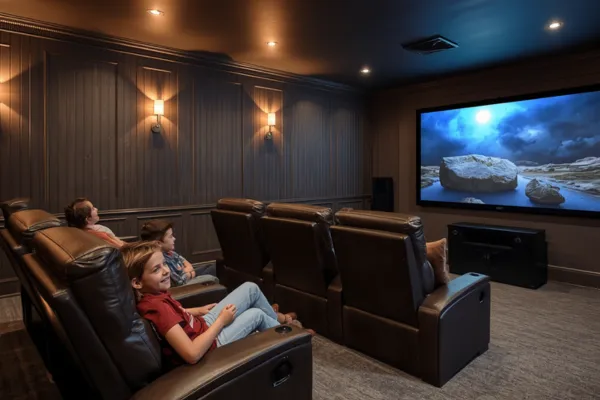
Just like a real movie theater, tiered seating (even a small step up in the back row) makes sure every seat has a clear view of the screen. This usually means building a low platform, often 8 to 12 inches high, for the back row of seating. It adds a construction step to the project, but it's one of the details that makes a basement theater feel like an actual theater rather than a living room with a bigger TV. If your ceiling height is limited, this is worth discussing early, since a riser reduces headroom in that section of the room.
2. Built In Surround Sound
Wall mounted or in ceiling speakers keep the room clean and immersive without cable clutter running across the floor. Running speaker wire during framing, before drywall goes up, is significantly easier and cleaner than trying to retrofit it later. This is one of the most requested upgrades we build into basement theaters, and it's much simpler to plan for from day one than to add afterward.
3. Blackout Solutions
Basements already have a head start here since most have minimal natural light, but any remaining windows or walkout doors need a real blackout solution, not just standard curtains. Blackout curtains, cellular shades, or even a simple light blocking panel over a small window will get you true theater dark conditions during the day.
4. Acoustic Wall Paneling
Beyond looks, acoustic panels absorb sound and reduce echo, which makes a real difference in how movies and music actually sound in the room. Basements tend to have harder, more reflective surfaces (concrete walls, low ceilings) than upstairs rooms, so treating at least the walls behind and beside the seating area noticeably improves sound quality without needing a full studio style build out.
5. A Dedicated Snack/Concession Station
A small counter with a mini fridge, popcorn machine, and cabinet storage turns movie night into an event, without anyone running upstairs mid film. Even a narrow 4 to 6 foot counter along one wall is usually enough for this, and it's a feature that gets used far more than homeowners initially expect.
6. Statement Lighting
LED strip lighting along the floor or ceiling edges (dimmable, ideally) adds ambiance without competing with the screen. Floor level lighting also serves a practical purpose, since a fully dark theater room can otherwise make it hard to see the aisle or steps during a movie.
7. Themed Decor
Some homeowners go all in with a specific movie or team theme. Others keep it simple and modern. Either way, a basement theater is a great space to have some fun with design choices you might not use elsewhere in the house, since it's a single, contained room rather than open living space.
8. Proper Ventilation
Basements can run warm with electronics, sound equipment, and a projector or large TV running for hours. A dedicated vent, small ductless unit, or extension of your existing HVAC system keeps the space comfortable during long movie marathons, and helps protect the electronics themselves from overheating over time.
9. Soundproofing Between Floors
If you don't want movie night rattling the floor above, adding soundproofing insulation in the ceiling keeps the experience contained to the theater room. This matters more in homes where the theater sits directly below a bedroom or home office, and it's a much easier addition during initial construction than after the ceiling is finished.
10. Flexible Furniture
Reclining theater seats are popular, but modular seating gives you the option to rearrange the room for parties, game nights, or anything beyond movies. If your basement theater is the only large flex space in the house, modular furniture is usually the more practical long term choice.
11. A Dedicated Media Closet or Equipment Rack
Receivers, streaming devices, gaming consoles, and cable boxes add up fast, and a tangle of wires and boxes under the TV can undercut an otherwise well designed room. A small closet or built in equipment rack keeps electronics organized, ventilated, and out of sight, while still being easy to access for updates or repairs.
12. Smart Home Integration
Universal remotes, app based lighting and audio control, and voice activated systems let you dim the lights, start the movie, and adjust the volume without juggling three or four separate remotes. This is easiest to wire in during the initial build, since running low voltage cable for smart home components is far simpler before the walls are closed up.
13. Screen Size and Projector Placement
The right screen size depends heavily on how far your seating sits from the wall, not just the size of the room itself. As a general rule of thumb, seating distance should be roughly 1.5 to 2.5 times the screen's diagonal size for a comfortable viewing experience. This is worth measuring out during the design phase, since a screen that's too large for the room can actually make movies harder to watch, not more immersive. If you're going with a projector rather than a large format TV, ceiling mount placement and throw distance both need to be planned before the ceiling is finished, since running power and, in some cases, a hardwired connection to the media closet is far easier before drywall goes up.
14. Comfortable, Durable Flooring
Standard basement flooring works fine in a theater room, but carpet or a plush rug in the seating area adds both comfort and an extra layer of sound absorption, which helps with the acoustics we mentioned earlier. Since basement theaters are typically used for extended periods (a two hour movie is a different kind of use than walking through a hallway), flooring comfort tends to matter more here than in other basement rooms.
Home Theater vs. Media Room: Which One Do You Actually Want?
Before finalizing a design, it's worth deciding which of these two you're really building, since they call for different layouts and budgets. A true home theater is typically a dedicated, closed off room built specifically for movie watching, with tiered seating, full acoustic treatment, and controlled lighting, and it usually isn't used for much else. A media room is more flexible, often combining a large TV or projector with comfortable seating in a space that also works for game nights, sports watching, or everyday lounging.
Neither option is better across the board, it depends on how your household actually uses the space. If movie watching is a serious, recurring activity and you have the square footage to dedicate a full room to it, a true theater delivers a noticeably better experience. If you want a flexible, multi purpose basement room that happens to be great for movies, a media room setup gets you most of the experience at a lower cost and with more everyday usefulness. We can help you think through which direction fits your space and how you'll actually use it during your consultation.
Frequently Asked Questions
How much does a basement home theater typically add to the project cost? It depends heavily on the level of finish, from a simple media room to a fully built out theater with tiered seating and acoustic treatment. Speak with us directly for a number based on your specific plans.
Do I need a permit for a basement home theater? The room itself typically falls under the standard basement finishing permit, but any dedicated electrical circuits for AV equipment are usually included in that same permit and inspection process.
What is the ideal basement size for a home theater? There's no strict minimum, but rooms under roughly 12 by 16 feet often work better as a simpler media room than a full theater with tiered seating, since the riser and screen distance both need real space to feel right.
Can I add a home theater to an already finished basement? Yes, though it's more involved than building it in during an initial finish, since wiring for speakers and any tiered platform usually needs to happen before drywall goes up. We can walk through what's realistic for your specific space.
Built by People Who've Done It Before
At Moore Remodeling, basement home theaters are one of our most requested basement builds, from full surround sound setups to simple, cozy movie rooms. We handle the whole process, from framing and electrical to the acoustic details that make a real difference in how the room feels and sounds.


